




















By Lisa Larson
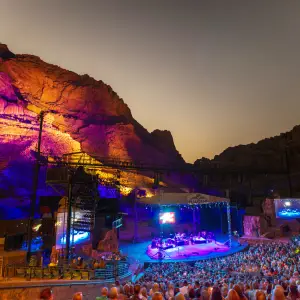
In a theater known for bringing Broadway quality productions to life against the parched, red rock backdrop in the southwest Utah desert, it’s unusual to imagine that right now one of the main attractions on stage — aside from a deeply talented cast — is water.
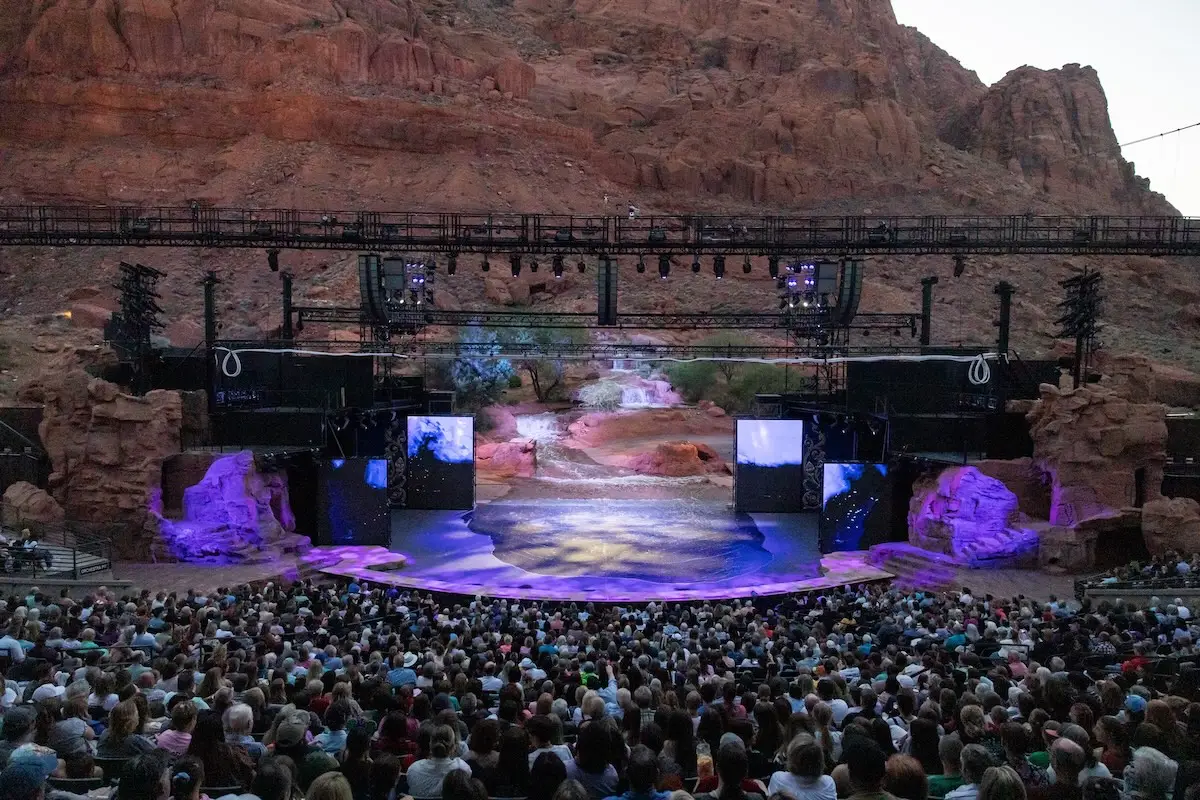
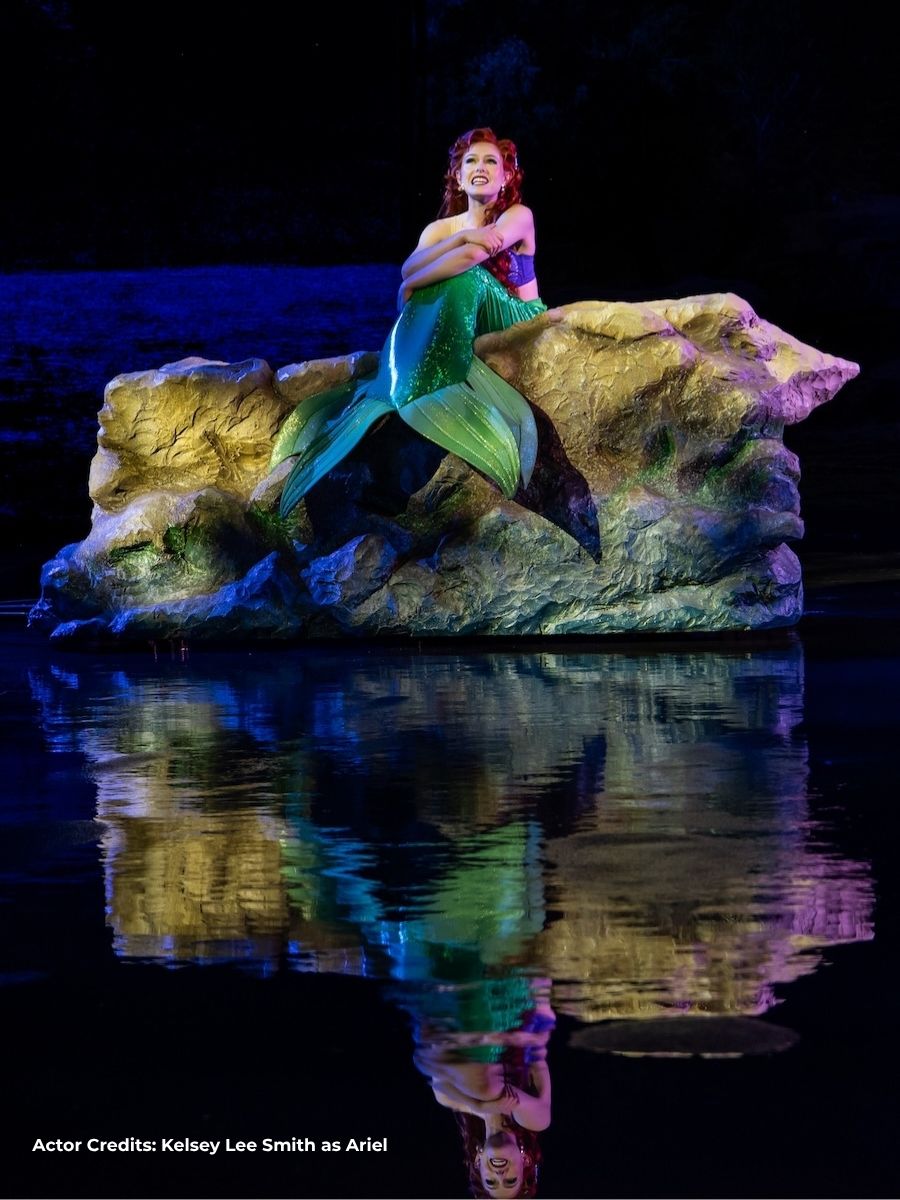
This season, the underwater world in Disney’s The Little Mermaid is even more spectacular, thanks to the 60-foot-wide water curtain taking center stage, and a full-scale flood set to engulf the entirety of the performing space.
“These are just some of the many unique things we can do at Tuacahn that you’re not going to see anywhere else,” said Troy McGee, technical director for Tuacahn.
It’s not the first time Tuacahn audiences have witnessed the powerful impact water can have on its outdoor productions, after all, the theater itself was built with the on-stage flood in mind. But in the last 30 years, the use of these technical elements and others have grown and evolved to match the growth and evolution of the venue itself, and the ever-increasing talent splashing across its stage.
“It has become a really fun and exciting part of working at Tuacahn, to be able to work with these elements,” McGee said. “It’s amazing when the rain curtain hits during ‘Under the Sea’ how much it energizes the cast and the audience.”
 This year, the water curtain is roughly 60-feet wide, covering the entirety of the visible stage and takes three technicians to operate. Water spills out of nozzles hanging around 28 feet above the stage, situated at 10-foot intervals, pouring water down at a rate of 160 gallons per minute before it runs off the front of the stage, through the baffles and into a pond near the backstage dressing rooms. From there, the water is circulated via a pump system to an upper pond and is eventually reused as water to flood the stage in other scenes and other shows.
“The water we use is culinary grade water, but it has to be filtered to be super clean and super clear,” McGee said. “If it’s not clear enough, it will distort the images being projected onto the water curtain.”
That’s right. In addition to setting an aquatic theme with all the sights and sounds of real water flowing on stage, the water curtain is used as a backdrop on which images of fish and other marine life can be projected.
But it’s not just Ariel’s undersea world that is getting an infusion of creativity from this liquid element. In addition to taking audiences to the depths of the ocean, the water curtain will serve as a portion of the twister that hits Dorothy’s farm in The Wizard of Oz.
“In the middle of summer when its 100 degrees, it really helps to have the water to connect people into the story and theme,” McGee said.
And it’s just one of the many wow factors that await audiences in each of this season’s stunning musicals. Get your tickets to any or all of the 2025-2026 Tuacahn season, featuring Disney’s The Little Mermaid, The Wizard of Oz, Newsies, Elf the Musical and Million Dollar Quartet. For more information check out www.tuacahn.org
Water Curtain Q&A
Q: How big is the water curtain?
The water curtain is 60-feet across, running the width of the visible performance space on stage.
Q: How much water does it use?
There are approximately 160 gallons of water per minute gushing down to form the water curtain.
Q: Does it have to be a special kind of water?
The water used is filtered culinary water. It has to be clean in order to be safe for the actors, and clear in order to allow projections to be visible to the audience.
Q: Do you reuse the water?
Once the water falls in the curtain, it runs off the front of the stage, through the baffles at the front of the stage, and then into a pond located near the backstage dressing rooms. Once the water is used in the water curtain, it is reused in the onstage flood.
Q: Doesn’t the flood water have to clean as well?
Yes, the flood water is also clean and chlorinated to be safe for the actors, but it does not have to be as clear as the water curtain.
Q: How long does it take to set up the water curtain?
About a week. It was built on a suspension bridge-type system between two towers. Triangle trusses create stability.
Q: How many people does it take to run the curtain?
Generally, there is one person handling the pumps, and one person on the stage left vacuums and one person on the stage right vacuums. It is possible there will be an integrated system at some point to run all of the systems off the light board.