










By Lisa Larson
When Davey Burton Midkiff (they/them) was 5 years old, one of their legs was developing more slowly than the other, causing them to limp and making their parents worry about their future mobility. In an effort to strengthen both of their legs, their parents put them in swimming lessons, but when the summer ended, so did the swimming, and their parents grappled to find something less seasonal to help their child. Within a year or so they decided to try tap dance — and it worked.
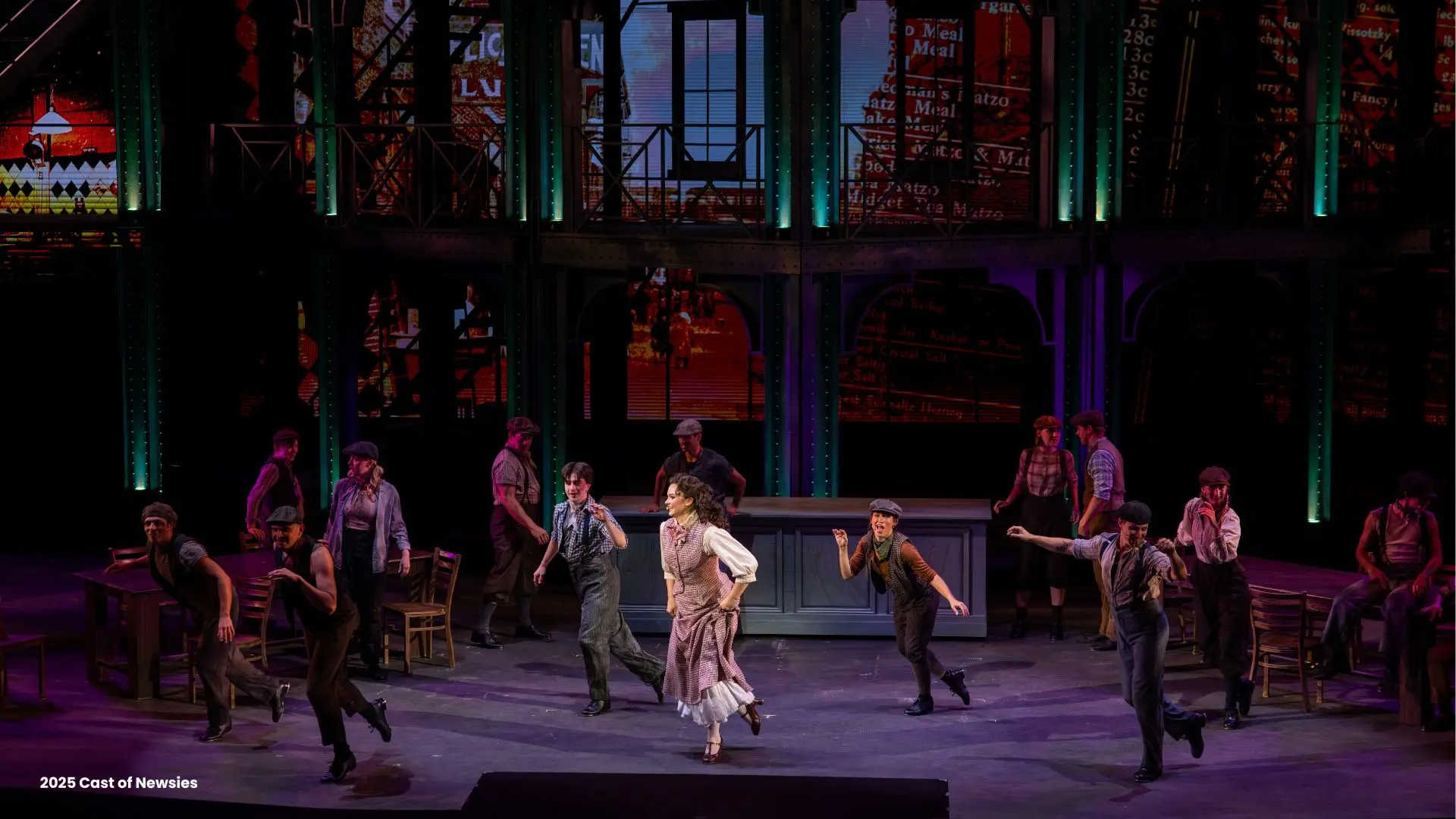
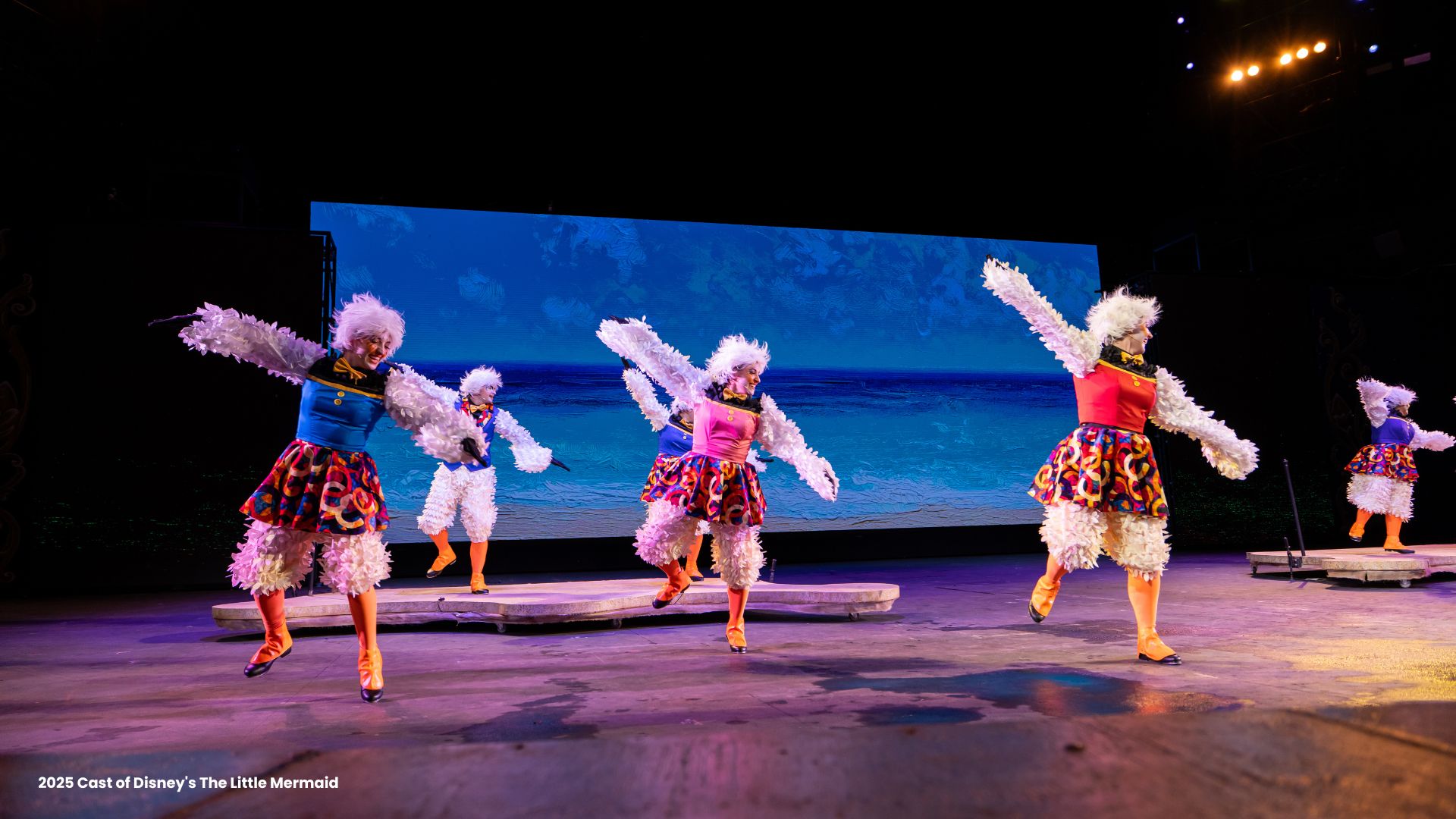
Fast forward to present day and audiences at Tuacahn would be hard-pressed to guess that this agile triple-threat ever struggled with their legs, especially when they are tapping across the stage as the Tinman in The Wizard of Oz, Scuttle in Disney’s The Little Mermaid and Race in Newsies.
“It’s pretty miraculous,” Midkiff said of their years in tap training. “It’s a beautiful gift to have something that is so artistically fulfilling that is also keeping me healthy.”
Across the cast, Midkiff is not the only one who holds a special place in their heart for the rhythm and syncopation of this particular style of dance.
“It’s always such a crowd pleaser,” said Mallorie Mendoza, assistant choreographer and assistant dance captain for Newsies. “The audience loves seeing the actors bring the music to life with their body.”
Although all forms of dance are a way of illustrating emotion through movement, tap dancing adds the audio component to the visual, making it a more complete sensory experience for the audience and the dancers; adding even more excitement to musical numbers like “Positoovity” in Disney’s The Little Mermaid, “If I Only Had A Heart” in The Wizard of Oz and “King of New York” in Newsies.
“I love how you get to contribute to the music,” Mendoza said. “In a very real way you are part of the orchestration, bringing out these rhythms and sounds that people might not necessarily pay attention to without the dance highlighting it.”
“I am someone who fidgets a lot, and I enjoy percussion. When listening to music percussion is what hits me in the chest the most,” Midkiff said. “With tap dancing, I can make the percussion sound that is satisfying my heart, while still dancing in the literal sense of the word, creating movement and expressing feeling through the taps.”
For Delaney Gold, dance has been a part of her life since the age of 4, but she credits her time at Belmont University in Nashville, Tennessee where her tap dance instructor proved particularly impactful.
“I had done tap competitions as a child but began focusing on other forms of theater and dance when I reached middle school or high school,” Gold said. “I owe it to Miss Debbie at Belmont for pouring into me in that way.”
Now, Gold has added choreographer Mara Newbery Greer at Tuacahn to her list of impactful tap influencers, noting Greer’s creativity as the means of further reviving her love for the art.
“It’s really fun to do good tap choreography that is challenging rhythmically and makes the dancers really listen to the music and count to get the syncopation and off-beats,” Gold said. “Mara is really good at those kinds of challenging rhythms.”
The learning curve
When learning to tap, the process is similar to other forms of dance in that you go to class and learn from the instructor. The difference, however, is that you are training your ear as well as your body.
At the professional level at Tuacahn, the process to learn the tap number for “King of New York,” for example, took about five hours the first day to learn all the steps for this three-minute number.
“That’s actually pretty fast,” Mendoza said, commending her fellow cast mates for the strength they brought to the room. “Everyone has different strengths and there are a variety of levels of comfort and skill with this dance style, but everyone really came through to do a fabulous job and it really is a highlight for everyone to see.”
The work wasn’t finished after the first five-hour day, of course. Many more days of rehearsal followed, with many of the cast members slipping into the dance studio during their off-hours just to solidify their parts.
“Training for tap is a lot of repetition and a lot of trusting the work,” Midkiff said. “I’ve found that if you try to muscle your way through a tap combination, you’re worse off and the sounds are not as clean as when you trust your body, the tap shoes and the music.”
A bit of history
“Tap has such a long-standing tradition in musical theater,” Gold said. “There has been a lot of evolution in the theater world and shows look different now than they did in the 1930s, but tap is a through-line that has stood the test of time.”
That through-line is even longer when one considers the ethnic heritage of this rhythmic dance, something Midkiff is very interested in.
“Tap dance originated with African Americans, and their communication with each other and a means of celebrating community,” Midkiff said. “Something I have been focusing on throughout this process is the roots of tap dance and honoring the artists that have come before me.”
How it all works
The execution of these three tap numbers, one in each of this season’s shows, includes a few extra technical elements and a couple of tricks of the trade.
For starters, since the Tuacahn stage is made of rubber, all of the live tapping on stage has to be done on tap tables made of wood, or along the baffle at the front of the stage. Any tapping done across the rest of the stage has actually been pre-recorded; so while the dancers in those positions are really doing the steps in time with the music, the actual tapping sounds were recorded previously.
“We’re all still doing the movements, it just has to be recorded in order to be amplified for the audience,” Gold said.
The live tapping on tap tables and across the baffle are amplified live during each show thanks to tap mics that run down the actors’ legs to pick up the sound their feet create.
“We all have two identical pairs of newsies pants, one with the tap mic in them, and one without,” Gold said.
In “Positoovity,” when Scuttle and the seagulls move their feet in time with the beat, Scuttle’s rhythmic sounds are made possible by a special pair of orange Converse high tops identical to the pair they wears during the rest of the show, only the second pair have been fitted with taps.
However, when Midkiff is playing the Tinman, there is no time to change into tap shoes, so those sounds have been pre-recorded.
“Having the sound pre-recorded takes some of the pressure off to create all the sounds live, but I enjoy maintaining the integrity of the choreography as much as I can when performing each night.”
Don’t miss these fantastic tap numbers, and all of the rest of the musical and dancing talent in this season’s Tuacahn lineup. For showtimes, dates and tickets, go online to www.tuacahn.org or call the box office at 435-652-3300.